Senior Word Game
EPIC PANDA GAMESWord
4.81.38K Reviews
- Version
- 1.3.0
- Installs
- 500.00K
- Age Rating
- Everyone
Screenshots
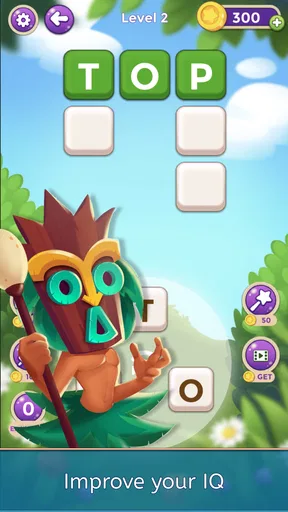
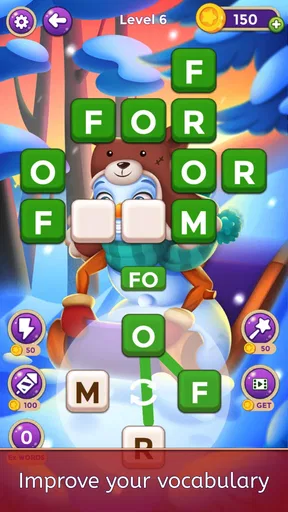
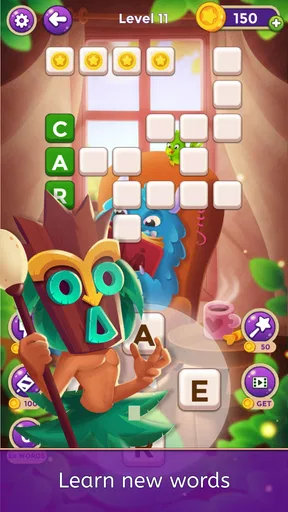
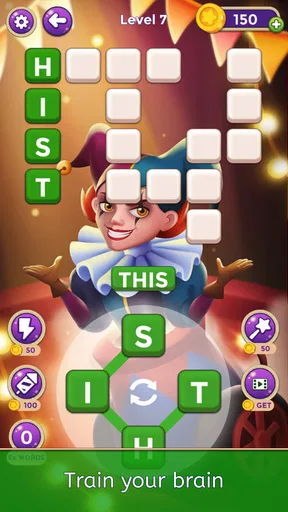
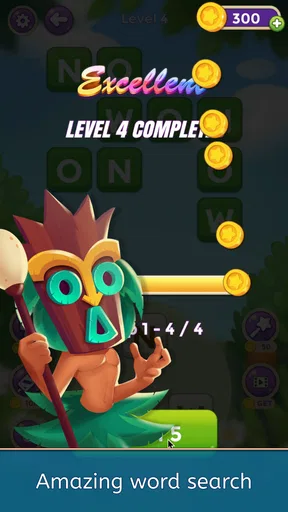
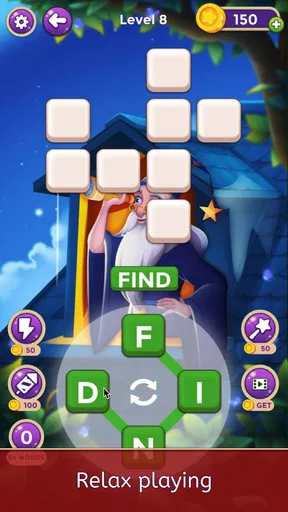
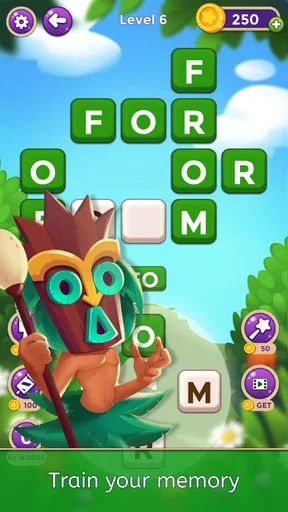
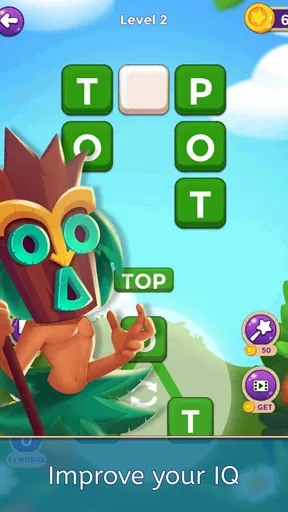
Our Review of Senior Word Game
 Analysis by Appyee
I went into Senior Word Game expecting a simple vocabulary exercise, and that is exactly where its appeal lies. It is a free word game from EPIC PANDA GAMES, designed around short puzzle sessions rather than a large story, complicated controls, or a competitive multiplayer structure. The basic promise is easy to understand: look at the available letters, find words, and keep your mind active while doing it.
What makes it worth considering is the way that small action turns into a repeatable routine. I choose a word, receive immediate confirmation, see the puzzle move forward, and then decide whether I want to solve one more. That sequence feels comfortable for casual play, especially when I want something quieter than an action game and more purposeful than endlessly scrolling through social media.
The game is listed for Everyone, so its presentation is aimed at broad accessibility rather than mature themes. It was released on December 13, 2022, and the current version is 1.3.0. Its store presence is also substantial, with over 500 thousand installs, an average rating of 4.8, and around 6.9 thousand ratings. Those figures suggest that the format has found an audience, although popularity alone does not make every puzzle a good fit for every player.
How the word-solving loop feels in everyday use
I find the loop easiest to enjoy when I treat each puzzle as a small observation exercise, not a race to enter every word that comes to mind. In this section, I’ll look at how that approach fits into ordinary breaks and what can make a familiar letter set feel briefly stubborn. Then I’ll turn to the practical checks that can help when the game itself is not behaving as expected.
The first action is deliberately simple
The most important part of this game happens before any reward appears: I need to start looking at the letters as a group instead of reading them one by one. I scan for short familiar words first, then try to notice less obvious combinations. That makes the opening move feel approachable even when the full solution is not immediately clear.
This is a useful choice for the intended audience. A player can begin without learning a complicated control scheme or memorizing a long set of rules. The interaction is centered on word recognition, so the challenge comes from attention and recall rather than from fast reactions. I can play while sitting with a coffee, taking a break, or waiting for an appointment without needing to prepare for a demanding session.
There is also a nice psychological advantage to starting with a modest target. Finding one word gives me a foothold. Instead of facing an empty puzzle and wondering where to begin, I have a small success that helps reveal the structure of the board. My practical tip is to avoid chasing the longest-looking answer immediately. Shorter words often help me understand the available letters and reduce the feeling that I am stuck.
That approach also shows one of the game's limitations. If you already solve word puzzles quickly, the opening stages may feel gentle rather than mentally taxing. The experience is better suited to steady concentration than to players seeking the pressure of a timed spelling contest or a highly competitive word ladder.
Feedback keeps each attempt moving
Once I enter a valid word, the response is clear enough to make the next decision obvious: continue searching, reconsider the remaining letters, or pause. That feedback rhythm is the heart of the experience. The game does not need elaborate animation to make progress satisfying; the important thing is that each correct answer changes the puzzle and gives me a reason to inspect it again.
I particularly like the way this rhythm turns uncertainty into a series of manageable questions. Which letters have I not used? Is there a familiar ending hidden in the group? Have I been overlooking a simple word because I am trying too hard to think of something unusual? These small questions make the activity feel more active than merely guessing until something works.
For older players or anyone returning to word games after a long break, this steady feedback can be more comfortable than an interface that constantly demands speed. I can take time to think, and the value of a session comes from attention rather than rapid tapping. That makes it suitable for a relaxed morning routine or a quiet evening wind-down.
Still, the feedback loop depends heavily on the quality of the puzzle in front of me. When the word set feels familiar, progress has a pleasant flow. When I cannot see the intended connection, the same loop can become repetitive: try an answer, receive a rejection, rearrange the letters, and repeat. Players who dislike trial and error may find that friction more noticeable than players who enjoy slowly testing possibilities.
The reward is progress, not spectacle
The main reward is the satisfaction of filling another part of the puzzle and getting closer to completion. That may sound modest, but it suits the game's identity. I do not need a dramatic plot twist or an elaborate collection system to feel that a short session had a point. The reward is the completed mental step and the sense that I noticed something I had initially missed.
This is where the game can work well as a light brain-training habit, although I would not treat it as a substitute for formal cognitive care or a guarantee of improved memory. Its value is practical and limited: it encourages me to focus on letters, retrieve vocabulary, and stay with a problem for a little longer. Those are worthwhile habits, but the game should be enjoyed as a word puzzle rather than presented as a medical tool.
One useful way to play is to set a personal stopping point based on attention instead of time. I might finish a puzzle and stop while I still feel fresh, or continue only if I am genuinely curious about the next answer. This prevents the activity from turning into a frustrating test of endurance. The best reward comes when I finish because I solved the puzzle, not because I forced myself through a difficult stretch.
The free entry is another part of the reward structure. I can try the core experience without paying upfront, which lowers the risk for someone who is unsure whether this style of game will hold their interest. There are in-app purchases ranging from $0.99 to $49.99 per item, so I would advise checking the purchase prompts carefully and deciding in advance whether optional spending belongs in my play routine.
Why another session begins
After I complete a puzzle, the reset is simple: the finished challenge gives way to the possibility of another one. That reset works because the previous session usually ends with a small feeling of closure rather than exhaustion. I have solved a set of words, exercised my attention, and can choose to return later without needing to remember a complicated storyline.
This makes the game particularly convenient for fragmented time. A person who has only a few quiet minutes can play without committing to a long campaign. I can stop after a single puzzle and return when I have more concentration available. That is a stronger use case than trying to squeeze a large adventure game into a short break, where interruptions can make the experience feel unfinished.
The reset also creates a gentle “one more” effect. I may want to see whether the next puzzle uses a different arrangement, whether the words come more quickly, or whether I can avoid needing help. That curiosity is healthy when it remains voluntary. If every new session starts to feel like the same search through letters, however, the loop loses some of its pull.
My recommendation is to vary the context rather than forcing longer play. A few puzzles during a quiet commute, a short evening session, or a break from reading can keep the game feeling fresh. I would not choose it as my only form of entertainment for an entire afternoon, because its narrow focus may become monotonous compared with a broader puzzle collection.
Where it fits among word-game alternatives
Compared with a crossword, this game asks for a more compact kind of attention. A crossword often depends on clues, general knowledge, and crossing answers that confirm one another. Here, the central task is more immediate: examine the letters and discover words that fit the puzzle. I prefer this format when I want less reading and a faster route from the first move to a visible result.
Compared with a word search, the mental process is different again. A word search rewards visual scanning across a fixed grid, while this game places more emphasis on recall and rearrangement. Someone who enjoys spotting patterns in a crowded page may prefer a traditional word search. I find Senior Word Game more satisfying when I want to actively generate possibilities instead of simply locating hidden text.
It also occupies a calmer space than competitive daily word games. There is no need for me to compare my answer with friends or worry about protecting a streak in front of other people. That can be a benefit for casual players and older users who want a private activity. On the other hand, anyone motivated by leaderboards, head-to-head matches, or strict time limits may find the experience too solitary.
Another difference is its suitability for offline-style puzzle use, which is part of the game's store positioning. That makes the concept attractive for travel or places where I want a distraction without relying on a constant connection. I still recommend checking the exact behavior on the device before planning around it, but the offline puzzle focus is one of the reasons this title feels more practical than a word game built mainly around live interaction.
Small habits that make solving easier
I get better results when I separate discovery from confirmation. First, I quickly list the obvious short words in my head. Then I look for common prefixes, suffixes, and letter pairs. Only after that do I spend time on unusual possibilities. This keeps me from burning all my attention on one difficult answer before I have explored the easy routes.
A second useful habit is to change the visual order of the letters mentally. If I keep reading them in the same arrangement, I tend to see the same failed guesses. I deliberately begin from another letter or group likely endings together. That small reset often reveals a word that was technically visible from the start but hidden by my first reading pattern.
When I am stuck, I treat the pause as part of the game rather than as a failure. Looking away for a moment and returning with a fresh scan can be more effective than repeatedly entering random guesses. This is especially helpful for players using the game as a calm memory or vocabulary exercise, because the goal is sustained attention, not simply reaching the answer by brute force.
I also think it is worth deciding what “success” means before playing. If I want relaxation, I can accept a slower solve. If I want a sharper challenge, I can try to use fewer guesses or finish without immediately searching for assistance elsewhere. The game supports that personal approach because its basic loop is flexible enough to accommodate both casual and more deliberate play.
Who will enjoy it, and who should skip it
I would recommend this game to people who like word puzzles but do not want a complicated ruleset. It is a good match for someone looking for a quiet daily activity, an older player who prefers legible, familiar puzzle interactions, or a casual gamer who wants short sessions that can be stopped easily. Its Everyone rating also makes it suitable for a broad household audience, provided each player is comfortable with the game's style.
It may also help someone rebuild a regular reading-and-recall habit. A few minutes of searching for words can be a gentler starting point than a demanding crossword. The important distinction is that I see it as an engaging mental exercise, not as proof that a player will gain specific memory benefits. Expectations should stay realistic.
I would skip it if I need rich narrative, fast action, social competition, or a deep progression system. It is not the right choice for someone who wants every session to introduce a new mechanic. I would also look elsewhere if repeated word discovery feels too close to homework. The simplicity that makes the game approachable can become the very thing that limits its long-term variety.
Players who are sensitive to optional purchase prompts should pay attention during installation and play. The game is free to start, but individual in-app purchases can reach $49.99. I would not assume that free access means every optional element is irrelevant; I would simply decide whether I want to spend anything and keep that boundary clear.
My verdict on the complete loop
Senior Word Game succeeds because its loop is easy to understand without feeling completely empty: I inspect letters, submit a word, receive progress, finish a small challenge, and return when I want another quiet problem to solve. The reward is modest but immediate, and the reset is convenient enough for real life. I can play in short bursts without losing the thread.
Its strongest quality is not novelty. It is the low-pressure connection between action and feedback. The game respects the appeal of solving one small problem at a time, which is why I can imagine recommending it to a friend who wants a simple word activity rather than a demanding game. EPIC PANDA GAMES has kept the focus on accessibility and routine, and that focus generally works.
The trade-off is variety and intensity. Dedicated word-game fans may eventually want more demanding clues, stronger competition, or a wider range of formats. Players who enjoy calm repetition will be more forgiving of that limitation. I would try the free version first, play several short sessions instead of judging it after one puzzle, and decide whether the rhythm stays enjoyable.
For me, the final answer is a qualified recommendation. It is a sensible choice for relaxed vocabulary play, brief offline-minded sessions, and anyone who likes the feeling of turning a handful of letters into a completed answer. It is less convincing as a complete all-purpose gaming experience. If that distinction matches what you want, Senior Word Game offers an approachable reason to return: the next puzzle is small, understandable, and just difficult enough to make solving it feel worthwhile.
Verdict
Strengths of Senior Word Game
- Large, easy-to-read letters make the game comfortable for older players.
- Simple controls allow quick access without a complicated learning curve.
- Word puzzles can support vocabulary practice and mental stimulation.
- Short rounds make it easy to play during breaks or quiet moments.
- Calm gameplay suits users who prefer relaxed challenges over fast action.
Limitations of Senior Word Game
- Some puzzles may feel too easy for experienced word-game players.
- Repeated word patterns can reduce variety during longer play sessions.
- Small interface elements outside the board may be harder to notice.
- Progression may feel limited for players seeking competitive features.
- Some features may require an internet connection or include advertisements.
Similar Picks in This Category
View All
Word Search - Word Puzzle Game
Bluetile4.8

Word Search Quest - Puzzles
Blackout Lab4.8

CodyCross: Crossword Puzzles
Fanatee, Inc.4.7

Words of Wonders: Crossword
Fugo Games4.9

Wordscapes: Word puzzle game
PeopleFun4.7

Word Search Explorer
PlaySimple Games4.9
Frequently Asked Questions
What is Senior Word Game, and how does it work?
Senior Word Game is a word-puzzle app designed to provide relaxed, accessible entertainment through vocabulary challenges. Players typically form words from available letters, solve short puzzles, and progress through increasingly varied stages. Its simple gameplay makes it suitable for casual sessions, although the exact difficulty and available modes may vary depending on the version installed.
Is Senior Word Game suitable for older adults and beginners?
The game is generally aimed at seniors and anyone who prefers straightforward word puzzles rather than fast action or complicated controls. Large, readable interface elements, familiar vocabulary, and turn-based gameplay can make it comfortable for beginners. However, users should check the device requirements and visual settings, since readability may differ across phones and tablets.
Can Senior Word Game be played without an internet connection?
Some word games allow players to complete previously downloaded levels offline, while other features—such as advertisements, daily challenges, cloud synchronization, or leaderboards—may require an internet connection. Before relying on offline access, test the game after disabling Wi-Fi and mobile data. Offline availability can also differ between Android and iOS versions.
Is Senior Word Game free to download, and does it contain ads or in-app purchases?
Senior Word Game may be available as a free download, but free access can include advertising, optional purchases, or locked content. Advertisements may appear between puzzles, while payments could remove ads, unlock additional levels, or provide hints. Review the store listing and in-app purchase details before downloading, especially if the device is used by a child or another family member.
What should I check before downloading Senior Word Game?
Before installing Senior Word Game, check that your device meets the required operating-system version and has enough free storage. It is also worth reviewing permissions, privacy information, recent user ratings, and whether the game supports your preferred language. If accessibility is important, confirm that text size, contrast, sound, and touch controls are comfortable on your specific device.
Play our best games!


